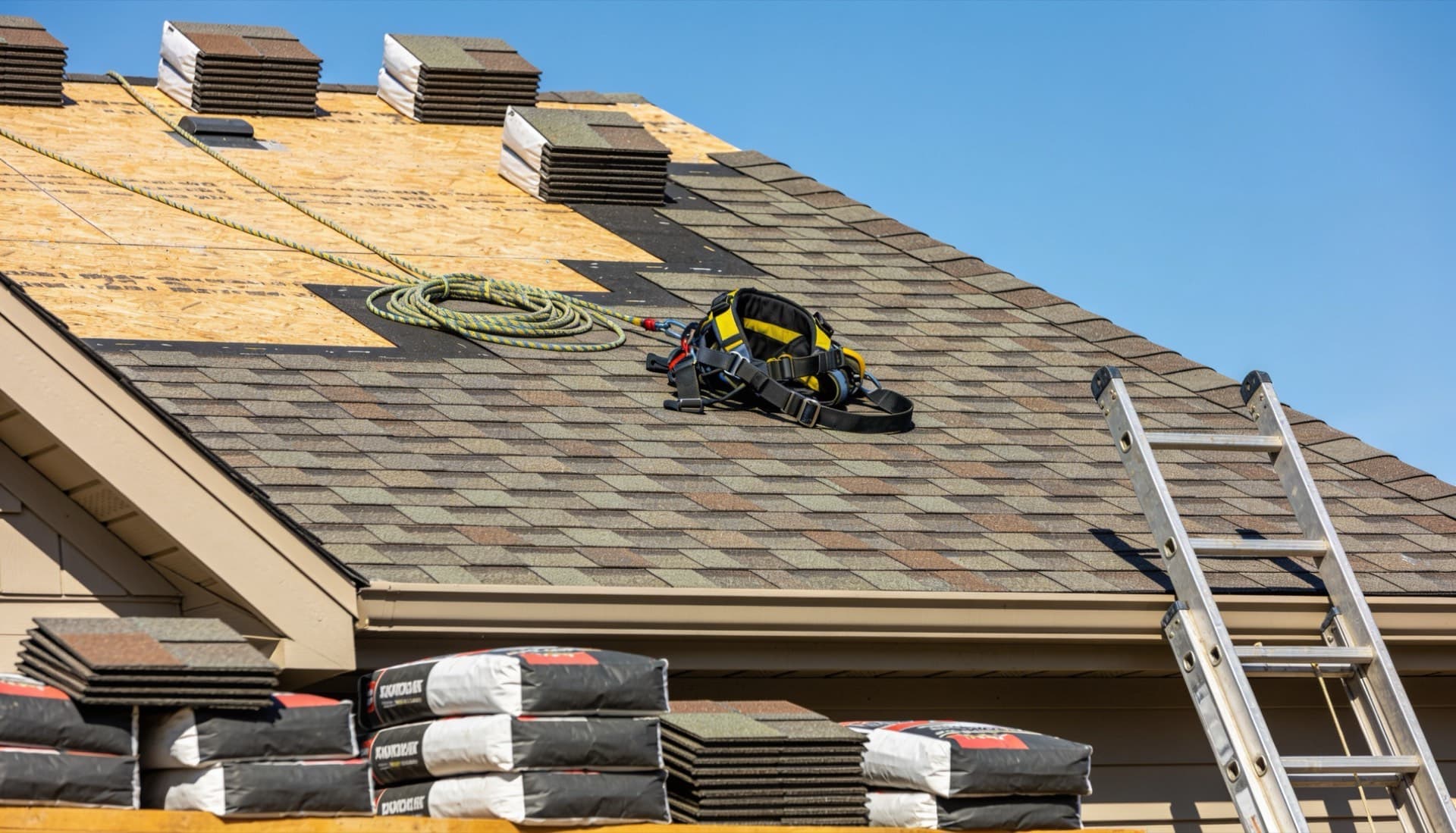
Insurance priced for the trade with construction's highest fall risk
Roofing carries more fall exposure than almost any other trade, and storm-damage work adds its own liability. We connect you with specialists who price roofing risk accurately instead of guessing.
What OSHA, licensing & GCs require
We make sure your coverage meets the bar — and issue the certificates and filings you need to prove it.
- OSHA fall protection at 6 feet or more for residential roofing workRequired
- State or local contractor license — proof of general liability and workers' comp usually required to hold itRequired
- Workers' comp for every roofing employee — one of the highest-rated trade classifications for a reasonRequired
Licensed Roofing Contractor Specialists Nationwide
A specialist who knows your state's licensing rules and can issue the certificates and filings you need.
What roofers need to be covered
Roofing is consistently one of the most dangerous trades in construction, and that reality shapes everything about how the insurance is priced and underwritten. Add storm-chasing crews working outside their home state, tear-off debris, and a leak that doesn't show up until the next winter, and generic contractor coverage rarely fits the actual risk.
General Liability
Covers third-party bodily injury, property damage, and advertising injury claims — the foundational policy nearly every business carries.
Workers' Compensation
Pays medical bills and lost wages when an employee is injured on the job. Required in most states once you have employees.
Commercial Auto
Covers vehicles used for business — liability, collision, and physical damage for owned, hired, and non-owned autos.
Inland Marine
Covers tools, equipment, and goods while in transit or away from your primary location — beyond standard property limits.
Commercial Umbrella
Extends the limits of your underlying liability policies for large claims that could otherwise threaten the business.
Commercial Property
Protects your building, inventory, equipment, and furnishings against fire, theft, storms, and other covered losses.
Where roofers get exposed
These are the scenarios our specialists see most often in your industry — and the coverage that responds when they happen.
Protect against these risksFalls from height
Falls are the leading cause of death in roofing work. Workers' compensation covers medical costs and lost wages, and OSHA-compliant fall protection is increasingly a condition insurers ask for before they'll bind coverage.
A leak that surfaces next season
Poorly sealed flashing or a missed nail can leak for months before it's noticed. Completed-operations coverage under general liability responds to damage claims that don't show up until well after the job is signed off.
Falling debris & third-party property damage
Tear-off debris, dropped tools, and ladders create real risk to vehicles, landscaping, and neighboring property. General liability covers these third-party claims.
Storm-chasing & multi-state crews
Storm-damage work often means unfamiliar crews working compressed timelines in a state you don't normally operate in. Coverage needs to travel with the crew, not just cover a home base.
Why roofers can't skip coverage
- OSHA requires fall protection for residential roofing work at heights of 6 feet or more — insurers increasingly ask for proof of compliance before binding coverage.
- Roofing is one of the highest-rated trade classifications for workers' compensation because of its fall-risk profile — a program priced for roofing specifically avoids the misclassification that inflates or underinsures generic contractor policies.
- Most licensing boards and GCs require proof of active general liability and workers' comp before a roofing contractor can pull a permit or work a job site.
By the numbers
51.8 per 100K
Roofer fatal injury rate (BLS 2023)
6 ft
OSHA fall-protection required at
70+
Specialists in our network
Roofers insurance FAQ
Roofing has one of the highest fall-fatality rates in construction, which directly affects workers' comp rating. Coverage priced for roofing specifically — rather than generic contractor coverage — reflects that risk accurately, which can actually save you money versus a policy that has your trade misclassified.
Get matched with a roofing contractor specialist
Share a few details and a licensed agent who understands roofers will reach out with tailored options. No cost, no obligation.
- Takes about 2 minutes
- One specialist, start to finish
- We compare multiple A-rated carriers
- Licensed to serve clients in your state