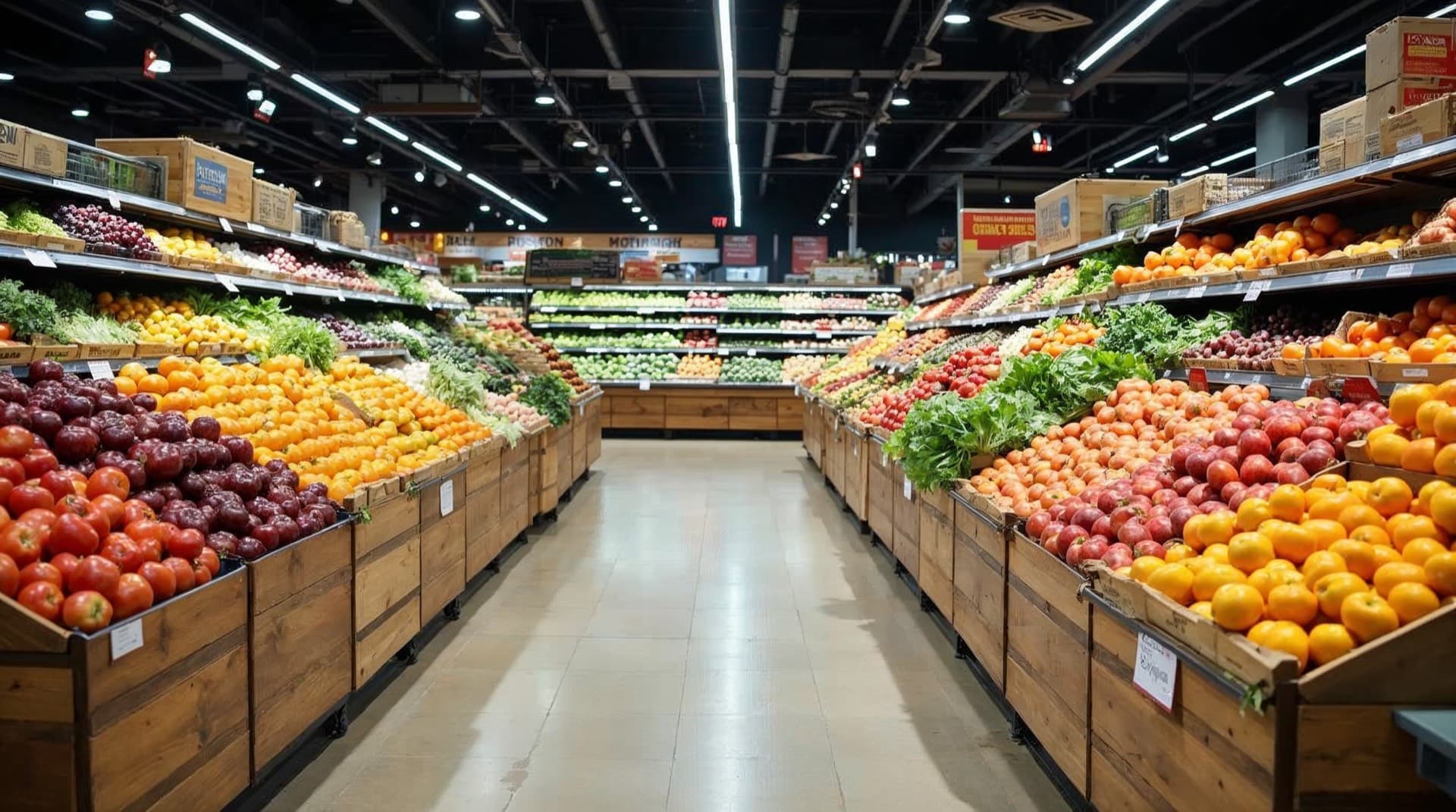
Insurance built for perishables, foot traffic & refrigeration
A refrigeration failure, a slip near the produce section, staff handling knives at a deli counter — grocery retail combines perishable inventory risk with high-traffic slip-and-fall exposure. We connect you with specialists who know the difference.
America's Trusted Grocery & Markets Insurance Experts
Licensed specialists who know your local requirements and carriers — not a generic national script.
“Our walk-in cooler died on a Friday night before a holiday weekend. The claim process for the spoiled inventory was the easiest part of a genuinely terrible weekend.”
the Alvarez family · Grocery Owners · Fresno, CA
Where grocery & markets get exposed
These are the scenarios our specialists see most often in your industry — and the coverage that responds when they happen.
Protect against these risksRefrigeration and cooler breakdowns
A failed walk-in cooler or refrigerated case can spoil thousands of dollars of perishable inventory overnight. Equipment breakdown coverage under your property policy helps recover the loss.
Slip-and-fall near produce and wet areas
Produce misting, ice, and spills create ongoing slip risk in high-traffic aisles. General liability covers the resulting medical and legal costs when a customer is injured.
Deli and prepared-food counter injuries
Slicers, knives, and hot equipment at a deli or prepared-food counter create real staff injury exposure beyond typical retail. Workers' comp covers medical costs and lost wages.
Foodborne illness from prepared or self-serve items
Deli, salad bar, and prepared-food sections carry contamination risk distinct from packaged goods. General liability responds to resulting illness claims.
Why grocery & markets can't skip coverage
- Perishable inventory means a single mechanical failure can produce a loss far larger than a comparable non-food retailer would face — equipment breakdown coverage specifically addresses this.
- Most commercial leases require proof of general liability and property coverage before you can open a grocery or specialty food retail location.
- Workers' compensation is legally required in nearly every state once you have staff on payroll, and deli/prepared-food operations add injury exposure beyond typical stocking and checkout work.
By the numbers
78,200
Injuries/illnesses, food & bev. stores (2023)
45K+
U.S. supermarkets
60+
Specialists in our network
What grocery & markets need to be covered
Grocery and specialty food retail carries a distinctive combination of risks: perishable inventory that a single equipment failure can wipe out, constant customer foot traffic through wet and cluttered areas, and — for stores with a deli or prepared-food counter — food-handling and knife-related staff injury exposure. The right policy accounts for all of it, not just a generic retail shell.
Business Owner's Policy (BOP)
Bundles general liability and commercial property into one cost-effective package built for small businesses.
General Liability
Covers third-party bodily injury, property damage, and advertising injury claims — the foundational policy nearly every business carries.
Workers' Compensation
Pays medical bills and lost wages when an employee is injured on the job. Required in most states once you have employees.
Commercial Property
Protects your building, inventory, equipment, and furnishings against fire, theft, storms, and other covered losses.
Commercial Auto
Covers vehicles used for business — liability, collision, and physical damage for owned, hired, and non-owned autos.
Grocery & Markets insurance FAQ
With equipment breakdown coverage as part of your property policy, yes — a mechanical failure that spoils refrigerated or frozen inventory is exactly the kind of loss it's designed to address.
Get matched with a grocery store specialist
Share a few details and a licensed agent who understands grocery & markets will reach out with tailored options. No cost, no obligation.
- Takes about 2 minutes
- One specialist, start to finish
- We compare multiple A-rated carriers
- Licensed to serve clients in your state