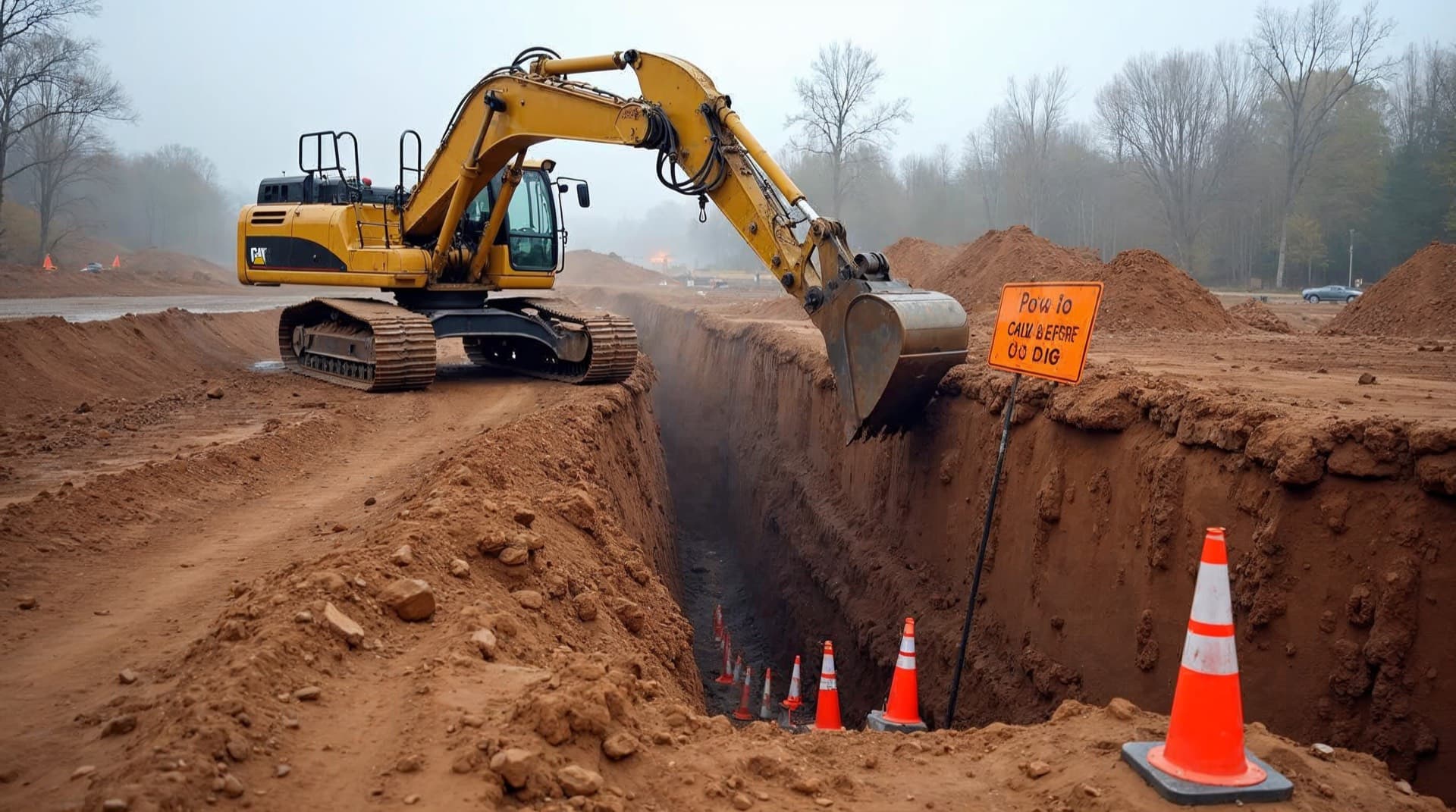
Coverage built for what's underground, not just what you're digging
A severed gas line, a trench collapse, a utility strike that shuts down a block — excavation carries some of the highest-severity claims in construction. We connect you with specialists who price that risk correctly.
What OSHA & 811 dig-law compliance require
We make sure your coverage meets the bar — and issue the certificates and filings you need to prove it.
- General liability sized for underground utility strike claims, one of excavation's most expensive exposuresRequired
- OSHA trenching and shoring standards apply to any excavation deeper than 5 feetRequired
- 811/Call-Before-You-Dig locate requests are legally required before excavation in every stateRequired
Licensed Excavation Contractor Specialists Nationwide
A specialist who knows your state's licensing rules and can issue the certificates and filings you need.
What excavation contractors need to be covered
Excavation work means moving earth around utilities you can't always see and soil that can behave unpredictably once it's opened up. A struck gas or fiber line, or a trench wall that gives way, can produce a claim far larger than the job itself. State 811 call-before-you-dig laws and OSHA trenching standards both exist because of how severe these incidents can be. The right coverage is sized to that severity, not treated like a standard grading job.
General Liability
Covers third-party bodily injury, property damage, and advertising injury claims — the foundational policy nearly every business carries.
Workers' Compensation
Pays medical bills and lost wages when an employee is injured on the job. Required in most states once you have employees.
Commercial Auto
Covers vehicles used for business — liability, collision, and physical damage for owned, hired, and non-owned autos.
Inland Marine
Covers tools, equipment, and goods while in transit or away from your primary location — beyond standard property limits.
Commercial Umbrella
Extends the limits of your underlying liability policies for large claims that could otherwise threaten the business.
Commercial Property
Protects your building, inventory, equipment, and furnishings against fire, theft, storms, and other covered losses.
Where excavation contractors get exposed
These are the scenarios our specialists see most often in your industry — and the coverage that responds when they happen.
Protect against these risksUnderground utility strikes
Hitting a gas, electric, or fiber line during excavation can trigger evacuation, service outages, and a liability claim well beyond the cost of the dig itself. General liability responds, but limits need to reflect the real severity of these claims.
Trench collapses
Unshored or improperly sloped trenches can collapse with little warning. OSHA trenching standards exist specifically because of how quickly this can turn fatal — workers' comp and general liability both come into play.
Property damage from grading and soil movement
Grading work that alters drainage or destabilizes an adjacent property's soil can trigger a claim long after the job is finished. Completed-operations coverage under general liability responds to these delayed claims.
Heavy equipment damage or theft
Excavators, skid steers, and compactors represent significant capital sitting at job sites, often overnight. Inland marine covers this mobile equipment away from a fixed shop location.
Why excavation contractors can't skip coverage
- Every state requires an 811/Call-Before-You-Dig locate request before excavation — proof of compliance and adequate insurance both factor into how a utility-strike claim gets handled.
- OSHA trenching and shoring standards apply to excavations deeper than 5 feet and are enforced with real citation activity — compliance and coverage go hand in hand here.
- Utility strikes and trench failures produce some of the highest-severity claims in the construction trades, which is why standard contractor limits often need to be scaled up specifically for excavation work.
By the numbers
21+
Avg. annual trench-collapse deaths (US)
$30B
Annual cost of US utility strike damage
50+
Specialists in our network
Excavation Contractors insurance FAQ
Yes — a documented locate request is often a key factor in how a utility-strike claim is evaluated, and skipping it can affect both liability and how a claim is handled. It's a compliance step and a risk-management one.
Get matched with a excavation contractor specialist
Share a few details and a licensed agent who understands excavation contractors will reach out with tailored options. No cost, no obligation.
- Takes about 2 minutes
- One specialist, start to finish
- We compare multiple A-rated carriers
- Licensed to serve clients in your state